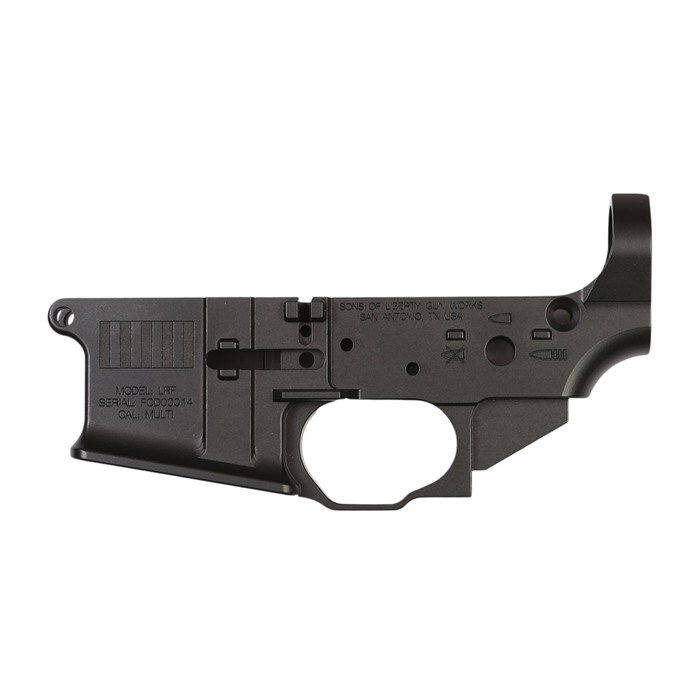
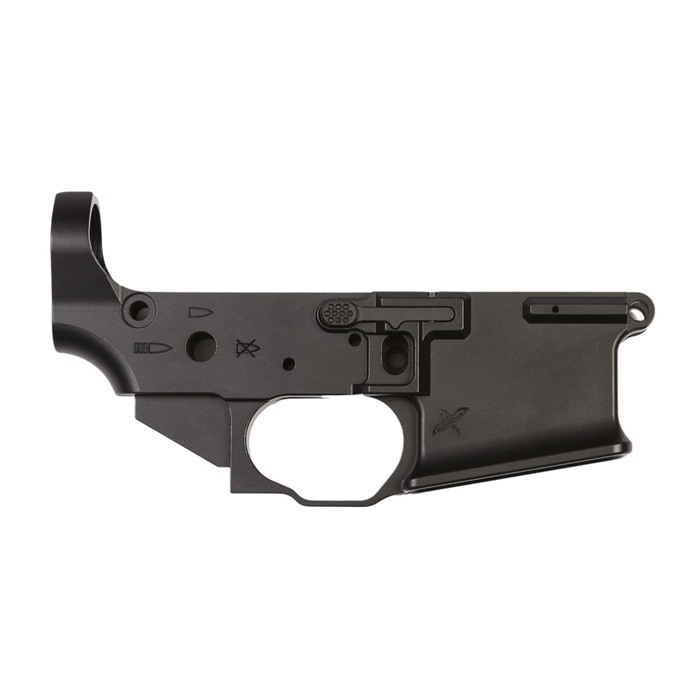
LRF (Lower Receiver, Forward Controls Design) is a collaboration between Sons of Liberty Gunworks (SOLGW) and Forward Controls Design (FCD). Machined from a solid block of 7075 aluminum, LRF is an ambidextrous AR15 lower receiver with built-in right side bolt release, designed to use our EMR-A (Enhanced Magazine Release, Ambidextrous), a Norgon Ambi-Catch will also work on the LRF. Design of LRF was completed in 2019. Due to difficulties of Covid-19 induced lockdowns and subsequent buying frenzies of all things firearms related, production was continuously delayed. Neither SOLGW nor FCD are known to rush development or production, we had used this time to further refine the LRF. LRF was designed with duty and defense users in mind. Its changes from TDP based lowers are based on ergonomics and better protection of magazine releases (both left and right side): EMR-A (Enhanced Magazine Release, Ambidextrous) fence on the left side. Taller than TDP spec magazine release fence on the right side to ensure TDP spec magazine release button stays below the fence. Countersunk take down pin hole on the left, when the user pushes the take down pin in from the left side, the pin can be pushed in further, with more protrusion on the right to pull from. Built in trigger guard with the same features as our TGF (Trigger guard, Forward Controls), more info: https://www.forwardcontrolsdesign.com/TGF-Trigger-Guard-Forward-Controls_p_178.html TGF has more usable space forward of the trigger, not behind. It also has a “ramp” to facilitate magazine loading for users that use the rear spline of the magazine to index and “rock” the magazine into the mag well. Flared magazine well with a larger opening. LRF’s changes are subtle and wholly functions based, a duty/defense firearm doesn’t concern itself with aesthetics, nor benefit from them. One will not find it decorated with lightening cuts/holes, or obnoxiously large logos. A tastefully small Cygnus is engraved on the right side of the LRF magazine well to denote FCD’s involvement in the project’s development, one can easily miss or overlook it, and that’s the point, we don’t intend the LRF to be a walking billboard. It’s designed and made for work, not for show.
Scopri il Lower Receiver Billet di Forward Controls Design
Il LRF (Lower Receiver, Forward Controls Design) è una collaborazione tra Sons of Liberty Gunworks (SOLGW) e Forward Controls Design (FCD). Realizzato da un blocco solido di alluminio 7075, il LRF è un lower receiver AR15 ambidestro con rilascio del bullone integrato sul lato destro, progettato per utilizzare il nostro EMR-A (Enhanced Magazine Release, Ambidextrous). Un Norgon Ambi-Catch funzionerà anche sul LRF.
Caratteristiche principali:
- Progettato tenendo in mente gli utenti in situazioni di dovere e difesa.
- Modifiche rispetto ai lower basati su TDP sono state fatte per migliorare l'ergonomia e la protezione dei rilasci dei caricatori (sia sul lato sinistro che destro).
- Fence EMR-A (Enhanced Magazine Release, Ambidextrous) sul lato sinistro.
- Fence per il rilascio del caricatore più alto rispetto alle specifiche TDP sul lato destro per garantire che il pulsante di rilascio del caricatore rimanga sotto il fence.
- Foro per il pin di smontaggio controincassato sul lato sinistro, permettendo una maggiore protrusione sul lato destro per una facile estrazione.
- Guardia del grilletto integrata con le stesse caratteristiche del nostro TGF (Trigger Guard, Forward Controls).
- Maggiore spazio utilizzabile davanti al grilletto, non dietro.
- Rampa per facilitare il caricamento del caricatore per gli utenti che utilizzano la scanalatura posteriore del caricatore per indicizzare e “rockare” il caricatore nel mag well.
- Mag well flared con un'apertura più grande.
Le modifiche del LRF sono sottili e completamente basate sulla funzionalità; un'arma da fuoco per dovere e difesa non si preoccupa dell'estetica, né ne trae beneficio. Non troverete decorazioni con tagli o fori leggeri, né loghi di grandi dimensioni. Un piccolo Cygnus è inciso sul lato destro del mag well del LRF per indicare il coinvolgimento di FCD nello sviluppo del progetto; è facile da perdere o trascurare, ed è proprio questo il punto: non intendiamo che il LRF sia un cartellone pubblicitario. È progettato e realizzato per il lavoro, non per la mostra.
 Aiuto e contatti


 Newsletter








 Visualizzazione classica
 Visualizzazione mobile